

AI and the Real Costs: What Everyone Overlooks When They Chase the Hype
Artificial intelligence is reshaping how we work and live, and it’s doing so at a pace we’ve never seen before. What most people don’t see is the bill that’s quietly stacking up behind the scenes.
The cost isn’t just hardware. It’s land, water, electricity, long-term infrastructure, and the strain on communities that never asked to host a hyperscale footprint in the first place.
IBM’s CEO recently warned that the true cost of AI is becoming unsustainable, and he’s not wrong. Every new model, every expanded dataset, every training cycle pushes the boundaries of what our grids, municipalities, and wallets can bear. We’ve always said, “Technology marches forward,” but this march is starting to shake the pavement.
Let’s break down the real economics behind the AI boom — the kind of numbers that rarely make it into the marketing decks.
The Power Problem: AI Eats Electricity for Breakfast
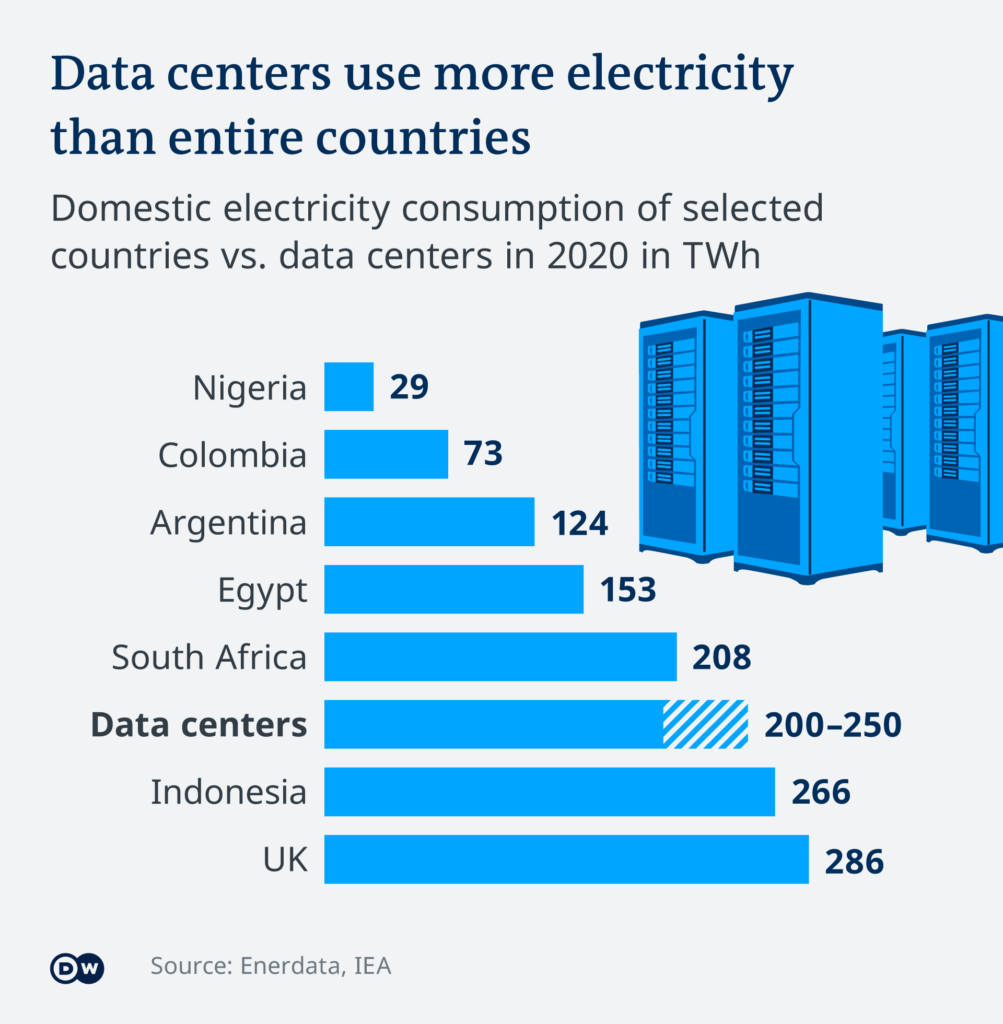
Training modern AI models requires staggering amounts of power. For perspective:
-
GPT-3 training consumed an estimated 1,287 MWh of electricity, roughly equal to powering 120 U.S. homes for an entire year.
(Source: Stanford/Meta AI Energy Footprint Analysis) -
Newer models like GPT-4 and GPT-5 are significantly larger, and though exact numbers aren’t publicly released, energy usage is estimated to be 10x–20x higher than GPT-3 based on compute scaling laws.
-
The International Energy Agency (IEA) forecasts that by 2027, data centers could consume 1,000 TWh annually — about the same as Japan’s entire power usage.
(Source: IEA 2024 Data Centre Outlook)
Electricity grids already run tight margins. Adding AI to the mix pushes utilities to expand infrastructure, often funded by taxpayers or through rate hikes. Communities feel the pinch long before the companies building the AI do.
Water Use: The Hidden Resource No One Talks About
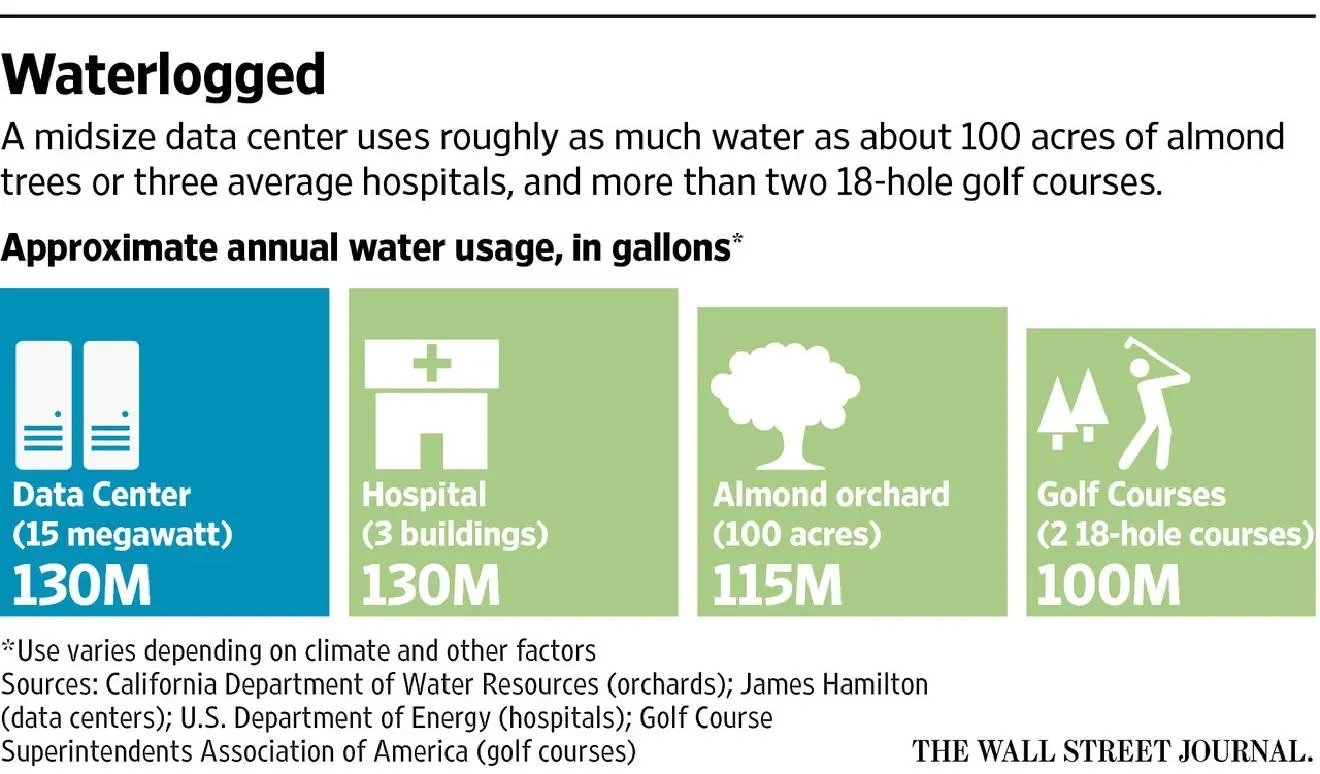
One of the most underreported costs: water.
Cooling AI-heavy data centers requires an astonishing amount of water. For example:
-
A single Google data center in The Dalles, Oregon, used over 274 million gallons of water in 2021.
(Source: The Oregonian public records analysis) -
Microsoft disclosed that training GPT-4 consumed over 700,000 liters of fresh water, largely for cooling.
(Source: University of California Riverside study) -
Local water tables around some data center regions report drops of 20 to 30 feet, prompting community pushback.
Where the public sees green-tech promises, residents see disappearing reservoirs and higher municipal costs. When a town’s infrastructure ages faster from heavy industrial consumption, taxpayers foot the bill.
Grid Impact: Communities Carry the Load While Big Tech Collects the Profit
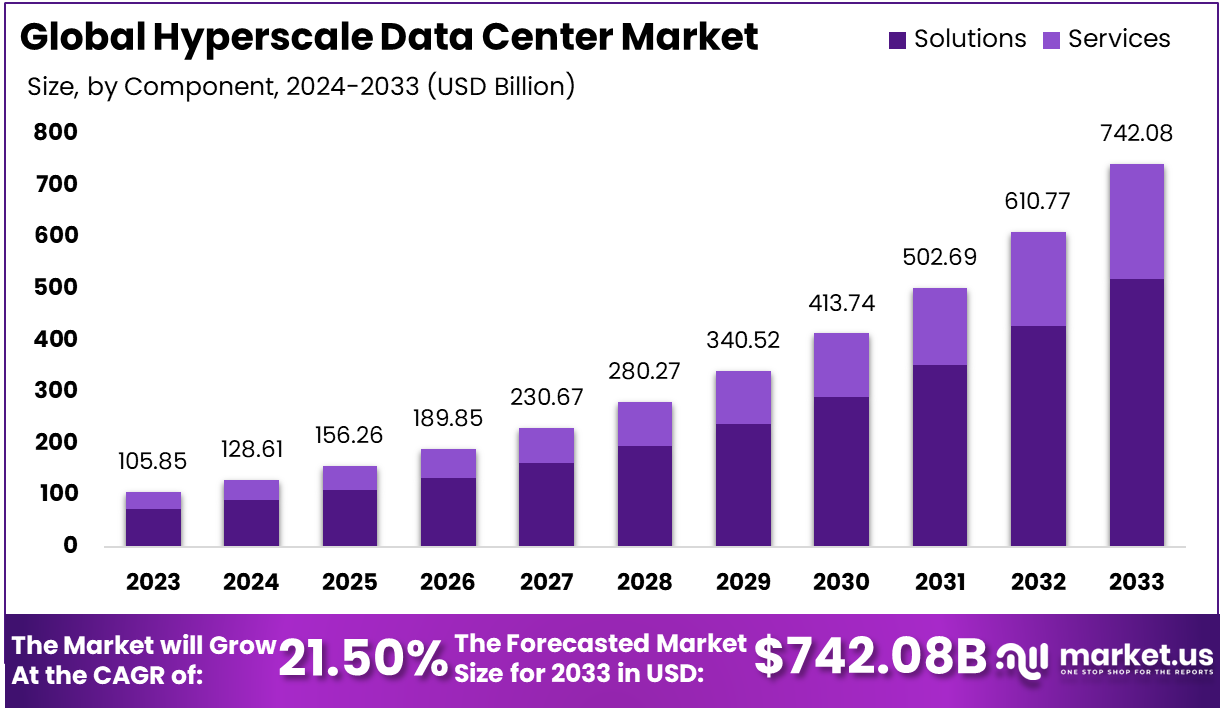
Large AI-capable data centers require:
-
New substations
-
High-voltage transmission upgrades
-
Dedicated fiber
-
Expanded water treatment systems
-
Emergency backup generation
These upgrades often run hundreds of millions of dollars, and while Big Tech contributes, municipalities are frequently left covering a significant share.
A few examples:
-
Loudoun County, VA — often called “Data Center Alley” — has invested over $1B in grid upgrades in the last decade.
(Source: Loudoun County Infrastructure Reports) -
Kansas City approved $8.2M in taxpayer incentives for Meta’s data center, with another $60M in infrastructure costs carried by utilities.
(Source: Missouri Economic Development filings) -
In Mesa, Arizona, local opposition grew when residents learned each new data center could require up to 1.7M gallons of water per day.
(Source: City of Mesa Water Resource Board)
Communities are rightfully asking, “Who really benefits here?” Publicly traded companies answer to shareholders first, not the towns they land in.
Hardware and Carbon Costs: Bigger Models Mean Bigger Footprints
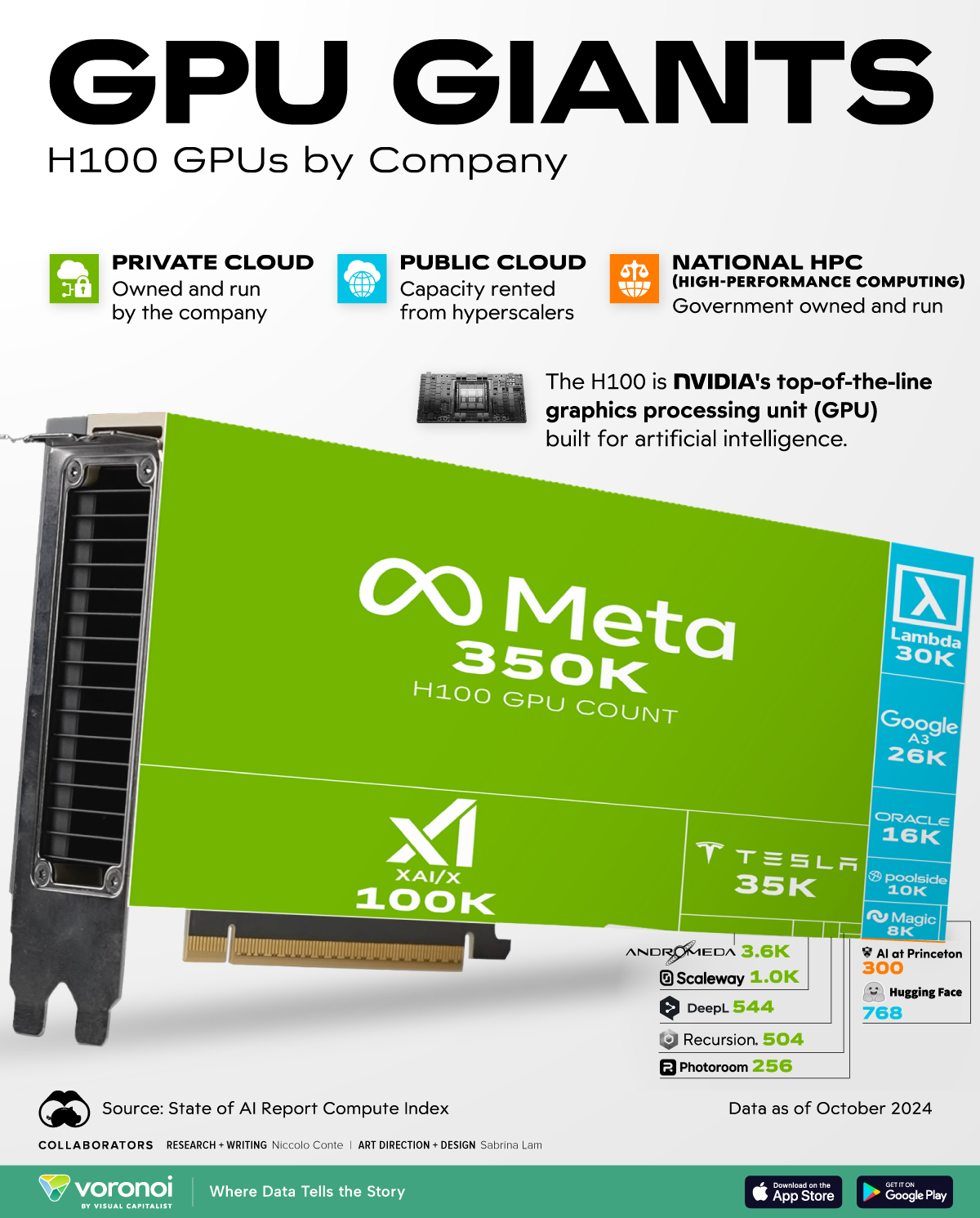
AI models grow exponentially, and so does the hardware that runs them:
-
NVIDIA’s H100 chips cost $25,000–$40,000 each, and a single AI training cluster can include 20,000+ GPUs.
(Source: Bloomberg / NVIDIA partner pricing) -
Building a hyperscale data center typically costs $600M to $1.2B.
-
Carbon impact: training GPT-3 produced over 500 metric tons of CO₂, and modern models are likely much higher.
(Source: University of Massachusetts Amherst study)
This is the “AI tax” nobody talks about. We chase the productivity wins but ignore the environmental debt being created to get them.
A Public vs Private AI Divide: Why Governance Now Matters
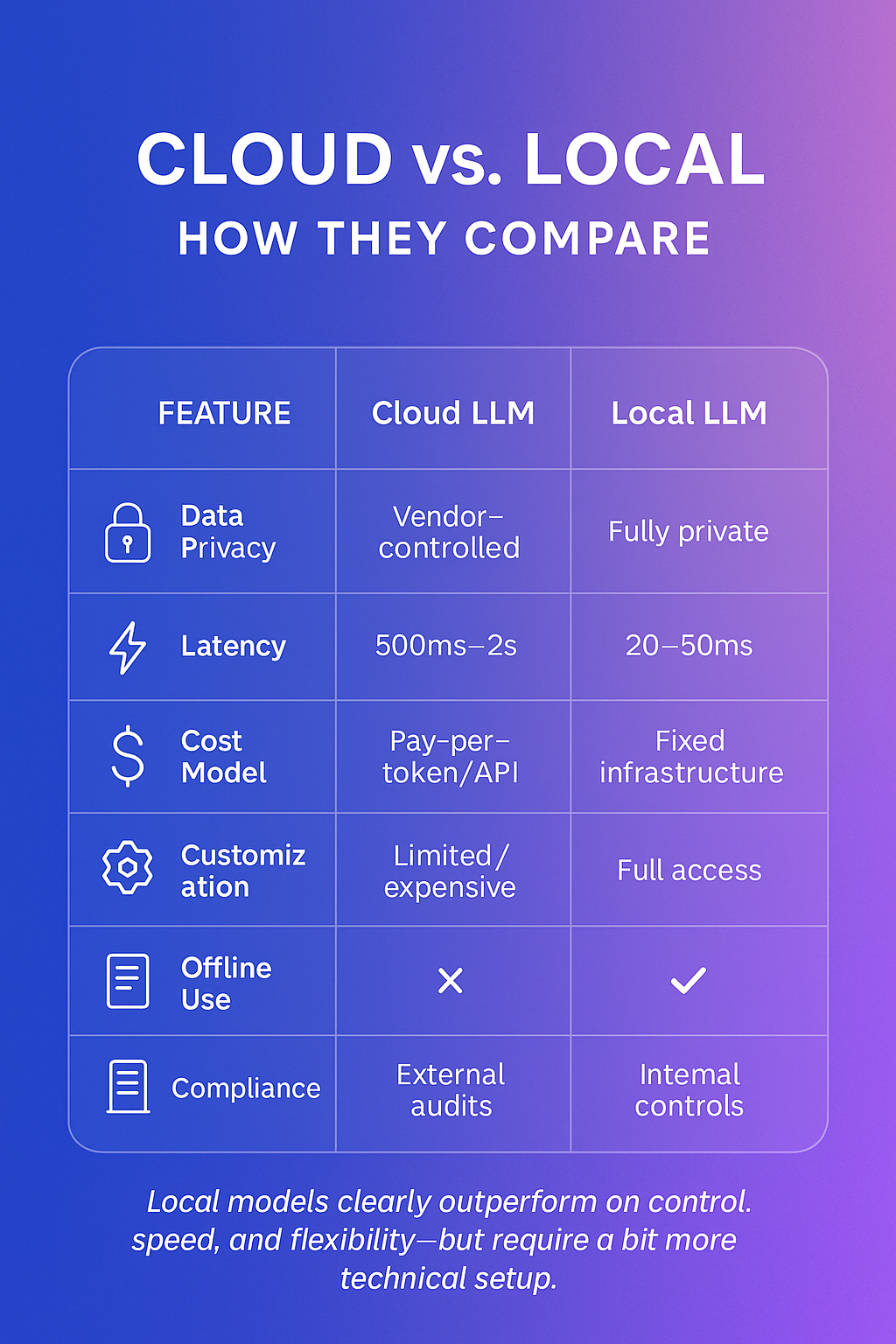
There’s a quiet shift happening:
-
Public models (OpenAI, Anthropic, Google, Meta)
Huge resource demands, massive global infrastructure, and lower transparency. -
Private / local models (Llama-3, Mistral, Phi-3, DeepSeek)
Smaller, more efficient, customizable, and able to run on standard hardware.
Major enterprises are beginning to realize they can cut costs by 50 to 80 percent by hosting smaller private models on existing infrastructure.
This is becoming a necessary strategy — not just for financial prudence but for sustainability. We’ve always valued “Do it right, do it smart,” and private models honor that tradition.
Corporate Greed or Corporate Reality? Maybe a Bit of Both
Publicly traded companies have one mandate: boost shareholder value. Efficiency improvements, community benefits, and long-term sustainability rarely rank higher than quarterly reports.
When a company chooses a site for a data center, they look for:
-
Cheap or subsidized land
-
Access to discounted industrial power
-
Abundant water
-
Favorable tax structures
-
Minimal regulatory resistance
The community, however, looks for:
-
Protection of local resources
-
Managed growth
-
Fair distribution of costs
-
Environmental stability
-
Long-term benefit for residents
Right now, those two visions rarely align.
So What Should Leaders Do?
Here’s what forward-thinking companies — especially TSPs and MSPs — can do to navigate AI responsibly:
1. Choose local/private models whenever possible
Saves money, reduces infrastructure load, and protects client data.
2. Use AI for meaningful automation, not gimmicks
Workflows, reporting, ticket triage — things that reduce labor, not increase noise.
3. Evaluate the lifecycle cost before implementing AI
Model updates, API fees, infrastructure, data storage, compliance.
4. Educate clients honestly
AI isn’t magic. It has real costs. Treat it like any other tool requiring planning and maintenance.
5. Advocate for responsible deployment
Communities deserve transparency. Tech leaders should set the example by acknowledging the real footprint of these systems.
Further Reading and Source References
These are the exact sources used for the figures above:
-
IEA Data Centres 2024 Energy Report
https://www.iea.org/reports/data-centres-and-data-transmission-networks -
University of California Riverside – Water Footprint of AI Models
https://www.sciencedirect.com/science/article/pii/S2666389923001460 -
The Oregonian: Google Water Use in The Dalles
https://www.oregonlive.com/silicon-forest/2022/11/google-used-just-over-a-quarter-billion-gallons-of-water-in-the-dalles.html -
Stanford / Meta AI Energy Footprint Analysis
https://crfm.stanford.edu/2022/10/25/model-energy.html -
Bloomberg – NVIDIA GPU pricing
https://www.bloomberg.com/news/articles/2023-11-20/nvidia-h100-ai-chips-price-soars-as-demand-outstrips-supply -
University of Massachusetts Amherst – Carbon Cost of AI
https://arxiv.org/abs/1906.02243 -
Loudoun County Data Center Infrastructure Reports
https://www.loudoun.gov/ArchiveCenter/ViewFile/Item/11788 -
City of Mesa Water Resource Board
https://www.mesaaz.gov/city-hall/water-resources -
Microsoft GPT-4 Water Report Coverage
https://www.theverge.com/2023/8/2/23817912/microsoft-openai-water-use-report